ID_438:ID2_920 :: Копия содержания
страницы:
ID_438:ID2_920 :: Копия содержания
страницы:  День святого обязательства (In the Catholic Church, holy days of obligation or holidays of obligation,[1])
 |
In the Catholic Church, holy days of obligation or holidays of obligation,[1] less commonly called feasts of precept, are the days on which, as canon 1247 of the Code of Canon Law states:
On Sundays and other holy days of obligation, the faithful are obliged to participate in the Mass.
Moreover they are to abstain from those works and affairs which hinder the worship to be rendered to God, the joy proper to the Lord’s day, or the suitable relaxation of mind and body.
The Code of Canons of the Eastern Churches lays down the following norms for Eastern Catholic Churches:
It is for the authority competent to establish the particular law of a sui iuris Church to constitute, transfer or suppress feast days and days of penance for that sui iuris Church, after, however, seeking the views of other sui iuris Churches and observing canon 40 §1.[2]
Holy days of obligation common to all the Eastern Churches are, apart from Sundays, the Nativity of our Lord Jesus Christ, the Epiphany, the Ascension, the Dormition of Holy Mary the Mother of God, and the Holy Apostles Peter and Paul, except for a particular law of a sui iuris Church, approved by the Apostolic See, which suppresses some holy days of obligation or transfers them to a Sunday.[3]
The Christian faithful are bound by the obligation to participate on Sundays and feast days in the Divine Liturgy or, according to the prescriptions or legitimate customs of their own sui iuris Church, in the celebration of the divine praises.[4]
The holy days of obligation for Latin Catholics are indicated in canon 1246 of the Code of Canon Law:
§1. Sunday, on which by apostolic tradition the paschal mystery is celebrated, must be observed in the universal Church as the primordial holy day of obligation. The following days must also be observed: the Nativity of our Lord Jesus Christ, the Epiphany, the Ascension, the Body and Blood of Christ, Holy Mary the Mother of God, her Immaculate Conception, her Assumption, Saint Joseph, Saint Peter and Saint Paul the Apostles, and All Saints.
§2. With the prior approval of the Apostolic See, however, the conference of bishops can suppress some of the holy days of obligation or transfer them to a Sunday.
Placed in the order of the civil calendar, the ten days (apart from Sundays) that this canon mentions are:
The number of holy days of obligation was once much greater. With the motu proprio Supremi disciplinae of 2 July 1911, Pope Pius X reduced the number of such non-Sunday holy days from 36 to 8 (the above 10 minus the feasts of the Body and Blood of Christ and Saint Joseph).[5] The present list was established in 1917.[6]
In many countries the bishops had obtained, even before the time of Pope Pius X, the Holy See's approval to diminish the number of non-Sunday holy days of obligation, making it far less than 36. Today too, Episcopal Conferences have availed themselves of the authority granted them in law to reduce the number below the ten mentioned above.
Non-Sunday holy days of obligation all have the rank of solemnity. Accordingly, if in Ordinary Time one of them falls on a Sunday, the Sunday celebration gives way to it; but the Sundays of Advent, Lent and Eastertide take precedence over all solemnities, which are then transferred to another day.[7]
In Vatican City, but not in the rest of the Diocese of Rome, Sundays and all ten days listed in canon 1246 are observed as holy days of obligation. This is also the case in the Swiss canton of Ticino, but perhaps nowhere else.
Some countries have as holy days of obligation feasts that are not among those listed in canon 1246. Ireland has Saint Patrick's Day.[8] Germany has St. Stephen on the "Second Christmas Day" (26 December), Easter Monday and Pentecost Monday (Whit Monday).[9]
In countries where they are not holy days of obligation, three of the ten feast days listed above are assigned to a Sunday as their proper day:[10]
If they are thus assigned to a Sunday, they are not included in the following national lists of holy days of obligation, since in every country all Sundays are holy days of obligation.
In Czech republic, holy days of obligation are, by Czech Bishops' Conference, reduced to only two days, which are also public holidays in the Czech Republic:
Since the other holy days of obligation are not observed as public holidays by the government, the attendance of mass is not obligatory, but only recommended for the Catholics. Attendance of the mass is of course obligatory for all the Sundays.
Czech Bishops' Conference also recommends to attend the mass at the other holy days of obligation, although it is not obligatory, and also at the days of saints of greatimportance for Czechs, i. e. Saint Wenceslas Day (28 September) and Saints Cyril and Methodius (5 July). These days are observed by Czech government as public holidays.
(See Liturgy Office)
(See Feiertagsregelung)
In addition, some Bundeslnder have one or more of the following holy days of obligation:
The solemnities of Saint Joseph, Saints Peter and Paul and the Immaculate Conception of Mary are observed nowhere in Germany as holy days of obligation. The attributes "holy day of obligation" and "public holiday" coincide; thus, not only dioceses have different ones but even in districts of the same diocese, the law is different; practically, it depends on which Bundesland, not which diocese you are in. In addition, Good Friday, which is another public holiday, is in practice, though not by Church law, celebrated in a way similar to the holy days of obligation, with attendance at the liturgical service, which on that day is distinct from celebration of Mass.
Austria, Switzerland and German-speaking areas in neighbouring countries have similar rules.
Instead of being transferred to the following Sunday, the Ascension of Our Lord, though not a holy day of obligation in Greece, is kept on the Thursday of the sixth week of Easter, in order to celebrate it on the same day as the Orthodox Church of Greece.
All the other Holy days of Obligation are either dispensed or transferred to the succeeding Sunday.
All Catholic dioceses in Slovakia maintain the same Holy days of obligation as defined by the Vatican, with the exception of the Solemnity of Saint Joseph, which is not obligatory. Of these only Epiphany, All Saints' Day and Christmas are also public holidays. The rest are ordinary working days, but Mass attendance is nonetheless required.
Additionally, the Slovak Bishops' Conference recommends Mass attendance on the following solemnities, because of their nationwide importance:
(See Calendario Litrgico Pastoral)
(See United States norm complementary to canon 1246)
Note 1: However, when 1 January (Solemnity of Mary, Mother of God), 15 August (Feast of the Assumption), or 1 November (Solemnity of All Saints) falls on a Saturday or on a Monday, the precept to attend Mass on that date is abrogated.
Note 2: In Hawaii, in 1992, the Bishop of Honolulu, pursuant to an indult from the Holy See, established the Feast of the Immaculate Conception and Christmas as the only Holy Days of Obligation to be observed in the state.[15]

Меня зовут Валера и я хочу запустить 2 вирусных идеи, которые искал уже давно, ЧТОБЫ ИЗМЕНИТЬ ЧТО-ТО В ЭТОМ МИРЕ.
Во-первых это символ +2800 значение которого совершенно противоположно +100500: 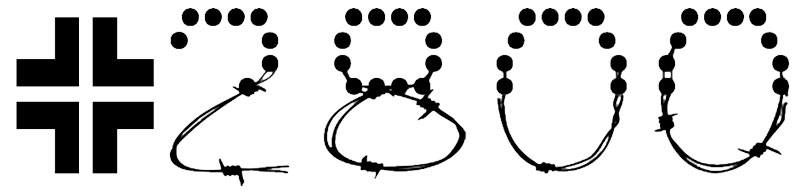
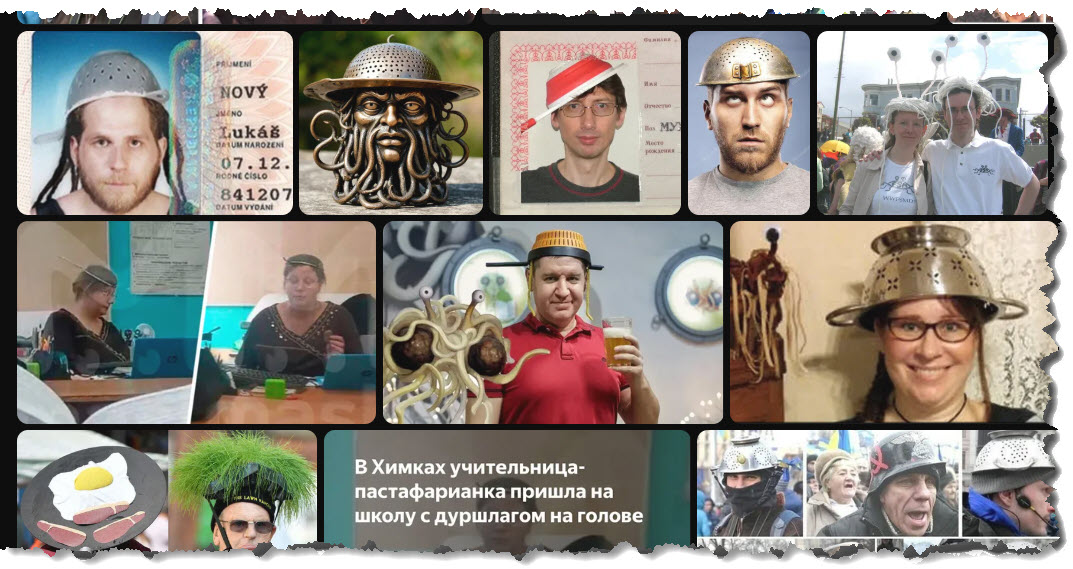
И он для того, чтобы рассказать о еврейском фашизме, 2800 рабах каждому еврею, а главное о каббалистическом языке и каббалистических методах и электронном концлагере который нам готовят и как его избежать. Я думаю многие из вас слышат об этом первый раз и не понимают о чем это я:-) Но это интересно, важно знать каждому и каждому важно рассказывать об этом другим. Подробнее об этом на сайте plus2800.ru. А во-вторых волшебный третий нос на лбу:-) Это как у пастофарианцев друшлак на голове. Во 1-ых это тоже религиозный символ придуманный для того, чтобы рассказать о +2800 и его значениях. Во 2-ых наделяет сверхспособностью о которой мечтал один английский комик. В 3-их он может спасти тому кто его носит жизнь! А в 4-ых его можно использовать как антистресс который всегда под рукой. У учительницы их Химок были проблемы из-за того, что она пришла в школу с друшлаком на голове и вела в таком виде урок. Из-за этого у неё были проблемы и это была разовая акция. А ношение третьего носа можно обосновать и практическими соображениями перечисленными выше. Но при этом все равно все будут знать откуда взялась такая мода, для чего и какие смыслы несет. И подробней об этом на сайте plus2800.ru. А самое главное, что когда я начинал этот проект, то думал что люди верят в религиозную чушь, потому что не знают о лжи и преступлениях церквей и если им рассказать, то они перестанут верить. Но на самом деле ни х.... И многие готовы верить в это, поддерживать это или по крайней мере относиться нейтрально, потому что думают что хоть это и ложь, но ложь полезная и выгодная, поэтому пусть будет. Хм... Возможно поможет если объяснить, что это вредная ложь и они то как раз и создают проблемы, которые решают. Но как ни странно это тоже малоэффективно. А знаете в чем причина? Людей зазомбировали и научили так, что им кажется. что они думают сами, а на самом деле думают чужими мыслями и никакие аргументы и факты ничего не изменят. Вот если телевизор скажет и в то, что будут говорить люди вокруг они поверят скорее чем логике и здравому смыслу. Поэтому чтобы они "услышали" логику и здравый смысл, нужно чтобы миллионы людей говорили об этом. И для этого и был придуман волшебный третий нос на лбу. И вот если миллионы, десятки миллионов, сотни миллионов будут носить волшебный третий нос и рассказывать о том, что зашифровано в символе +2800, то они вдруг услышат здравый смысл и логике и вдруг они "поймут"... Хотя на самом деле нет, а просто опять поверят авторитету. Но в принципе это на данном этапе и не важно - главное результат. Но в общем идея такая и подробнее об этом на сайте plus2800.ru |

|
Скачать все эти страницы с ссылками и привязанными к ним файлами |
 |
|||
|
|